
Rauf Şangar · Published on June 16th, 2025 · 6 min read
Table tennis looks simple until the score reaches 10-10 and nobody at the table agrees on what happens next. Knowing the rules is not just about avoiding arguments — it changes how you serve, receive, and manage pressure. This guide covers the modern ITTF rules every recreational and club player should know, explained in plain language.
The Table, Net, and Ball
A regulation table is 2.74 m long, 1.525 m wide, and 76 cm high, with a net 15.25 cm high. The ball is 40 mm, made of plastic, and weighs 2.7 g. You do not need to memorise the numbers, but knowing them helps when you buy equipment or set up a hall.
Scoring: Games to 11
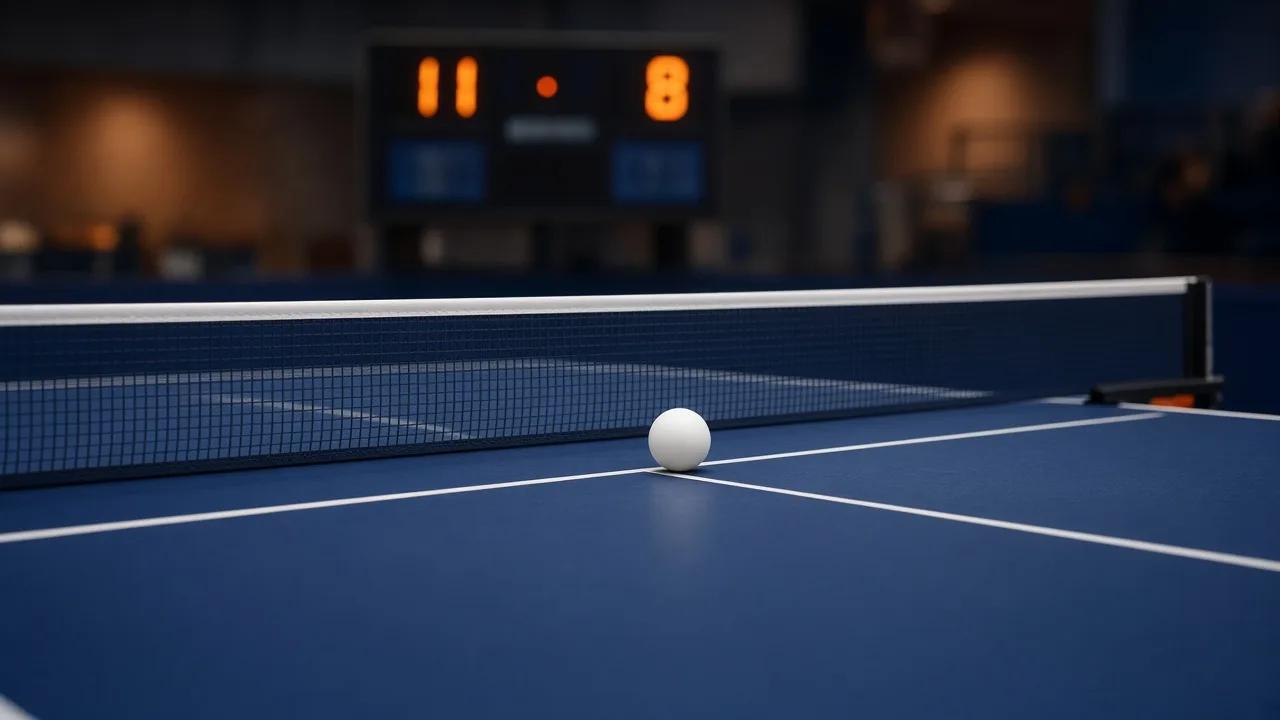
Modern matches are played to 11 points, not 21. You win a game by reaching 11 points with at least a two-point lead. If the score reaches 10-10, play continues until one player leads by two (12-10, 13-11, and so on).
Matches and sets
A match is usually best of five or best of seven games. Best of five means the first to win three games takes the match; best of seven needs four. Club leagues and tournaments state the format in advance.
Service Rules That Catch People Out
The serve is the most misunderstood part of the rules. Legally:
- The ball rests on an open, flat palm behind the end line before the toss.
- You must throw the ball up at least 16 cm, roughly the height of the net.
- The ball is struck on the way down, behind the end line, in full view of the receiver.
- You may not hide the ball with your body, arm, or free hand.
In singles the serve can go anywhere on the opponent's side. The old rule about serving diagonally applies only to doubles.
Serve Rotation
Each player serves two points in a row, then the serve switches. At 10-10 (deuce), service alternates every single point. Get this wrong in a friendly game and you can lose track of who should serve — always call the score before each serve.
| Situation | Serve rule |
|---|---|
| Normal play | 2 serves each, then switch |
| Deuce (10-10) | 1 serve each, alternate |
| New game | Server order swaps |
The Let, the Net, and the Edge
A serve that clips the net and still lands legally is a let — replay it, with no penalty and no limit on repeats. During a rally, a ball that touches the net and continues over is simply in play.
The edge is a common source of arguments. A ball that hits the top edge of the table surface is in; a ball that strikes the vertical side of the table is out. The white line marking the edge is part of the playing surface.
Losing a Point
You lose the point when you:
- Fail to make a legal serve or return
- Let the ball bounce twice on your side
- Hit the ball before it bounces on your side (a volley)
- Move the table or touch the net with anything
- Touch the playing surface with your free hand
Doubles Basics
Doubles adds two rules: partners must alternate hitting the ball, and the serve must go diagonally from the server's right half to the receiver's right half. Miss the sequence and you lose the point, even on a perfect shot.
Common Misunderstandings
- "You must win by two only at 20" — no, the two-point rule applies from 10-10.
- "The serve must be diagonal" — only in doubles.
- "A net serve is a fault" — it is a let; you replay it.
- "You can volley over the table" — no, the ball must bounce first.
Why Rules Are a Tactical Advantage
Players who know the rules exploit them. They serve short and low because they understand the receiver's limits, they call the score to stay calm under pressure, and they never gift points on service faults. In my coaching sessions in Kyrenia, twenty minutes on rules often wins beginners more matches than a new stroke.
Print the scoring and serve-rotation table, keep it in your bag, and check it during your first few league nights. Once the rules become automatic, your attention returns to where it belongs — reading spin, moving your feet, and enjoying the rally.
Want to improve your game in person?
Book a Lesson with Rauf →